“THAT’S NOT HOW YOU PLAY!” My son screamed at me while snatching the car out of my hand and stomping his foot.
Oh boy. Here we go. Again.
I was exhausted. Why does playing have to be so difficult? If this is how he plays with me, how does he play with his friends?
The messages I was hearing were flying at me faster than I could sort through them.
You’re failing. Why can’t you teach your child to be kind? You’re doing everything wrong, he’s going to grow up to be the child that nobody wants to play with.
As soon as I was able to fight off the messages of failure I was hearing (because I’m not failing…he’s 3 and this is a part of development…) I was able to see that all we needed was a little practice with social skills. Easy peasy. Now…how do we do that?
What are Social Skills?
Social skills are skills we use to interact and communicate with others. In every part of our lives, we have relationships with others, and healthy relationships contribute to our overall success and happiness.
Some social skills that contribute to healthy relationships are:
- Sharing
- Teamwork
- Following Directions
- Personal Space
- Problem-solving
What the Research Says about Social Skills
Social skills are important for preschoolers to practice and they allow children to build healthy relationships throughout their entire life.
Research shows that children with strong social skills are happier, less stressed, and better behaved than those who struggle socially. This makes sense, kids who struggle to communicate are more likely to experience stress and anxiety.
Research also shows that kids who have stronger social skills in kindergarten are more likely to pursue higher education and have a full-time job by the time they are 25 than those who struggle.
What Social Skills to Expect at Each Age
Is this amount of frustration developmentally appropriate for this age? When should my child learn empathy? I always struggle with questions about appropriate expectations.
It’s so hard to know what’s a gap in learning, and what isn’t developmentally appropriate yet. Clearly teaching a 4-month-old to share isn’t developmentally appropriate, but what age is?
Here’s a timeline that will help you know what to expect when:
12 Months
- Interact with caregivers, hands toys back and forth
- Play pattycake, peekaboo
- Shows affection
- Waves goodbye
18 Months
- Start pretend play
- Have more temper tantrums
- Becomes more interested in children around them, but still parallel playing
2 Years
- Likes people
- May take turns
- Has difficulty sharing toys or attention
- Enjoys dramatic play
3 Years
- Pretend plays
- Shows a wider range of emotions
- May still have temper tantrums
- Can separate from caregivers more easily
- Becomes more interested in playing with other children
4 Years
- Often strong-willed
- Enjoys friends and playing in a group
- Understands turn-taking and sharing
- Enjoys dramatic play
- Uses manners
- Shows empathy
5 Years
- Tests boundaries
- Enjoys playing with other children
- Enjoys competitive games
- Shows empathy
- Understands the need for rules and to play fair
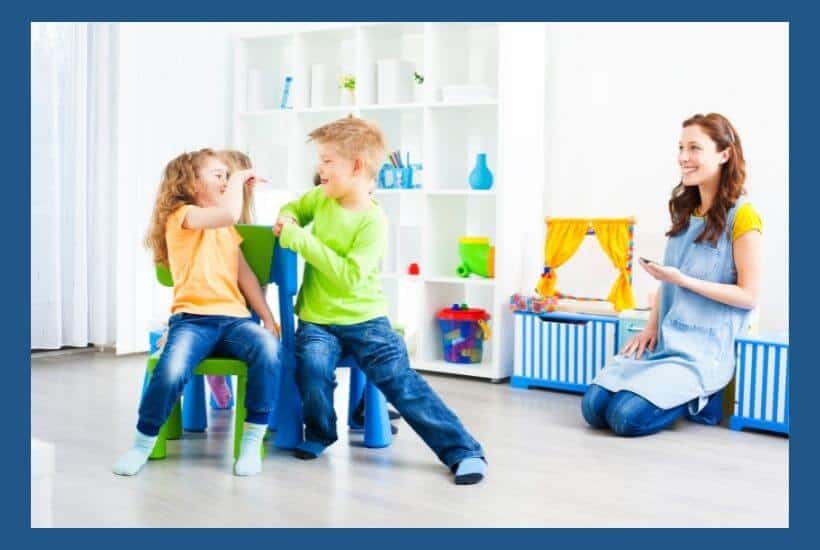
These Important Social Skills are Learned Best Through
We know that children learn best through play, but play is not only good for academic learning but also for social development. When children play, they have endless opportunities to practice social skills and learn from their friends. They often practice:
- Taking turns
- Problem-solving
- Empathy
- Patience
- Sharing
- Personal space
Social Skills Activities for Preschoolers
Some of my favorite activities I’ve used in my classroom and with my own children to help them practice social skills are simple, quick, and easy to do.
As an Amazon Associate, I earn from qualifying purchases at no additional cost to you.
1. Social stories
Social stories are great because they can think about the problem when emotions are calm. Eventually, they will encounter the problem, or a similar situation, and already have a plan on how to handle it. Tell your child stories about different things that may make them upset or be difficult to handle, and help them think through what an appropriate reaction might be.
2. Games that reward self-control and taking-turns
Any games that require children to take turns are great for practicing self-control. Games like red light, green light, or Simon Says that require (and reward) self-control are a great way for children to practice. If they are able to practice in a game environment where they can be successful, they will feel proud and want to use their new skills more often. Win-win!
3. Name Games
Name games are a great way to break the ice with a new group of children. You can play “Who stole the cookies from the cookie jar” by writing names on pretend cookies and putting them in a container. When you pull out a name, everyone looks at that person and says “Who stole the cookie from the cookie jar?” “Tommy stole the cookie from the cookie jar!” Willoughby Wallaby Woo is also a fun game kids love. Here are more name games.
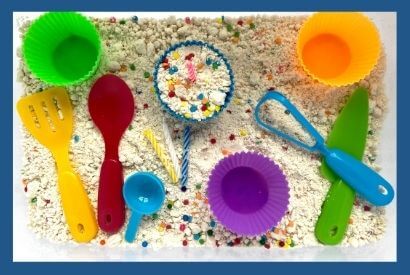
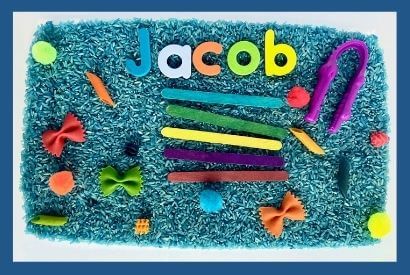
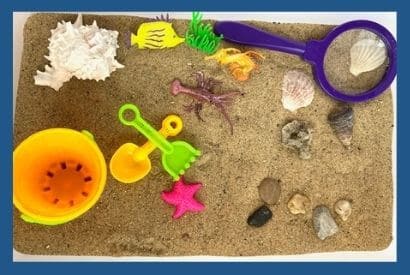
4. Sensory bins
Sensory bins are amazing toys for many reasons. Not only do they keep attention longer, but they teach many academic skills as well as problem-solving, fine motor skills, imagination, communication/language, and patience.
5. Dramatic Play
Children love imitating the things they see grown-ups doing. Playing family, restaurant, post office, and grocery store all give children the opportunity to practice social skills, communication, teamwork, turn-taking, problem-solving, and empathy. (Not to mention creativity and imagination.)
6. Emotion Charades
An important part of having strong social skills is the ability to know how others are feeling. Playing emotion charades can give children the chance to practice identifying how other people are feeling. To take this one step further, you can discuss how to respond to someone who is feeling that way, or a time you felt that way. Played just like regular charades, write emotions on slips of paper, the actor draws an emotion card and has to act out the feeling. The other players guess how the person is feeling. We love these cards!
7. Cooperative Games
Building with blocks, magnatiles, or legos are all great ways to get kids to practice teamwork.
8. Board Games
Board games are great bonding time! I love laughing together and watching the excitement on children’s faces throughout the game. Yes, board games are a great way to practice academic skills, but they are so much more. Board games help us learn:
- Turn-taking
- Following instructions
- Sportsmanship
- Conversation
- Active listening
- Problem-solving
- Conversation skills
- Patience
- Self-control
- Handling disappointment
- Empathy
Some of our favorite board games are:
Candy Land – Candy Land gets a bad rap, but we love it. It is simple enough for even the youngest of players to play, and you can get through a round quickly for short attention spans.
Sneaky Snacky Squirrel – We play this game over and over again. You gather different colors of acorns in your tree stump, but be careful. They can be stolen or blown away by the wind. This is also a great game for working on fine motor skills.
Feed the Woozle – Feed the Woozle is a cooperative game that teaches social skills as well as counting, taking turns, fine motor skills, and spatial awareness. Plus, this is a grow-with-me game with different levels of play so it will last for years to come.
Snug as a Bug in a Rug– Another cooperative grow-with-me game that has different levels of play. We love these because we can play together and the whole family can participate at their own level, plus the game will last for many years. This game teaches shapes, colors, counting, as well as problem-solving, teamwork, and shared decision making.
Pick Me Up Piggie– We love this cooperative game. Each animal has a special errand to do in town. Using teamwork, Piggie drives around to pick up each animal in this memory game.
9. Read
Books are a great way to teach social skills. It gives kids time to process what they are learning and come up with a plan on how to use their new skills while their emotions are calm. If they can think through situations ahead of time, they will be more prepared when they need to use their new skills.
Must Read Books that Teach Social Skills
It’s Bear’s birthday and he gets all kinds of new toys. Bear learns quickly that it is difficult to share things that are special to you. Your kids will be able to relate to Bear and will love watching Bear as he solves his problem … and learns why sharing is so important.
A Little Spot books are wonderful. This box set includes many skills needed to form healthy relationships such as responsibility, kindness, honesty, patience, and more.
Myself Theme- Feelings & Cooperation by Newmark Learning
These books are great for teaching self-control, problem-solving, how to build healthy relationships, and identifying feelings. These are simple, relatable stories that your kiddos will love.
Personal Space Camp by Julia Cook
Julia Cook is one of my favorite authors for teaching social-emotional skills. Personal Space Camp is for kids who are a little older or can understand a more complex storyline. Written for kids ages 5-8, Louis teaches children about other people’s physical boundaries. You will quickly fall in love with Louis in Personal Space Camp!
Harrison P. Spader, Personal Space Invader by Christianne C. Jones
Oh, Harrison. He just loves life and others so much he has difficulty respecting their personal space. This book is written for younger audiences, and it gives some very practical ways to help measure personal space.
All It Takes…
Social skills aren’t something you can read one book about and be done.
At first glance, social skills can seem like a tricky thing to teach, but thankfully with a little intentionality and consistent practice, your child will reap the lifelong benefits of healthy relationships.
Your Turn:
What are your favorite activities to practice social skills?
Want More?
If you liked this, you’ll love: